A new study conducted within NÖROM (Neuroscience and Neurotechnology Center of Excellence) examined the effects of boric acid (BA) in limiting organ damage in the life-threatening condition of sepsis. The study was published in the journal Biological Trace Element Research.
Research on Sepsis and Organ Damage
Sepsis, an uncontrolled response of the body to infection, can lead to severe tissue damage in vital organs such as the lungs and kidneys. NÖROM researchers scrutinized the protective potential of boric acid within the scope of immunomodulatory strategies that could halt these damage processes.
Key Data of the Research
The effects of boric acid applied in an experimental sepsis model on tissues were revealed with the following findings:
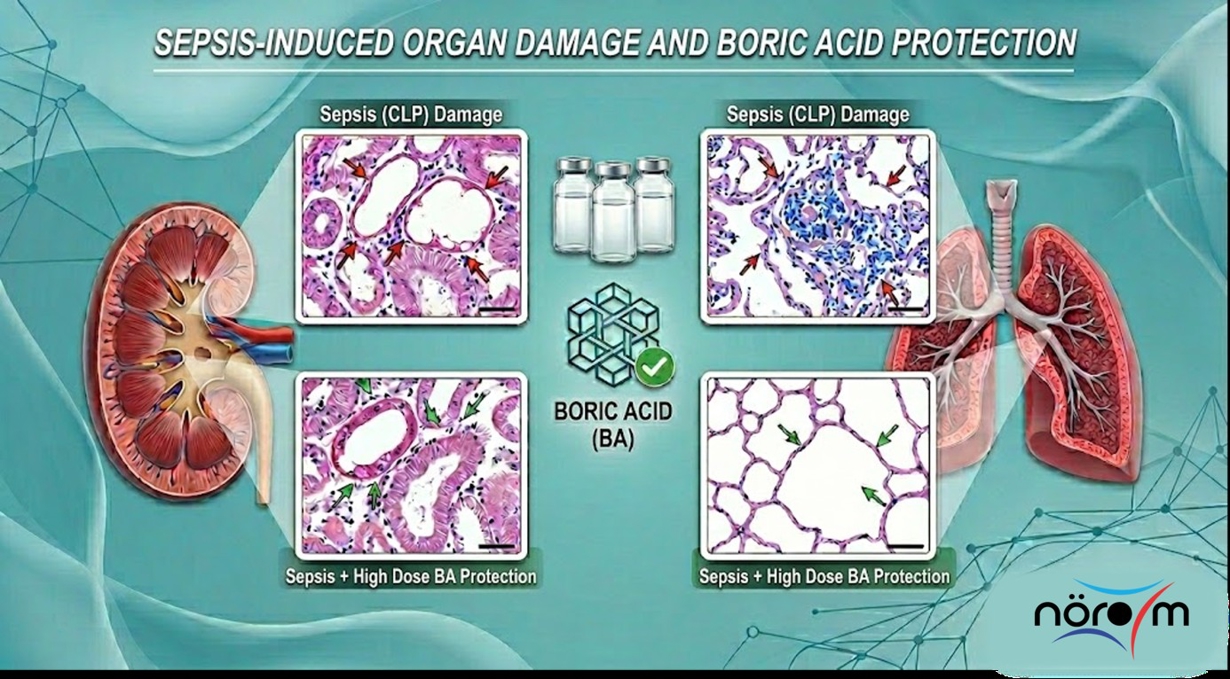
Preservation of Kidney Structure: It was determined that structural degradations and vascular dilations observed in the filtration units of the kidneys during sepsis decreased with the application of boric acid.
Lung Tissue Integrity: Research data showed that tissue thickening in the lungs and the associated damage were alleviated with boric acid support.
Suppression of Oxidative Stress: It was found that boric acid significantly suppressed oxidative stress, which damages cells in both organs, and supported tissue integrity.
This study, conducted on organ failure caused by systemic severe infections, demonstrates the potential of boric acid as a protective agent in critical care processes with preclinical data. Offering a strategic perspective to limit end-organ damage caused by sepsis—one of the primary causes of high morbidity and mortality rates in intensive care units—the research provides strong evidence that boric acid can partially reverse cellular destruction, particularly in lung and kidney tissues.
While the obtained data establish a scientific basis for the development of organ-protective strategies, the usability of a compound like boric acid as a "tissue-friendly" agent opens a new door of hope for future treatment protocols. The research team emphasizes the need for further studies involving different dosage regimens and optimized application timings to translate these findings into clinical applications.
Kurtipek, A.C., Dursun, A.D., Yığman, Z. et al. Effectiveness of Boric Acid in Sepsis in Rats with Cecal Perforation. Biol Trace Elem Res (2025). https://doi.org/10.1007/s12011-025-04917-2
NÖROM Research: Psychosocial Stress Selectively Disrupts the Brain's Time Perception Networks
Hidden Danger in Traffic: NÖROM Research Reveals the Effects of Migraine on Driving Safety
First in Turkish: R-Based Clinical Reading Assessment Tool Developed
Researchers at NÖROM Discover Protein Connection Between Chronic Migraine and Cognitive Complaints
First, They Spiked in Their minds, Then They Became World Champions!