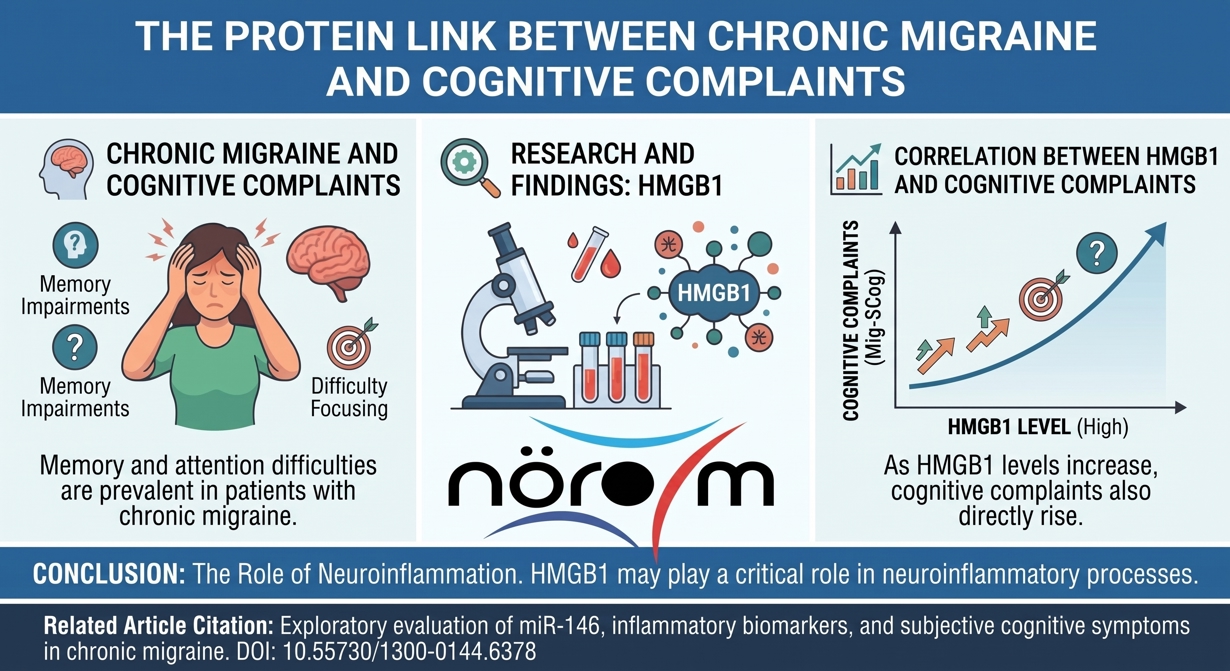
Chronic migraine is not limited to severe headaches; a large proportion of patients also exhibit cognitive symptoms such as memory and concentration problems. A new study conducted within NÖROM has brought to light the biological clues underlying these mental symptoms, which significantly reduce patients' quality of life.
With this study, the researchers aimed to elucidate the disease mechanism and identify the cellular causes of the memory and concentration problems that patients frequently report.
Relationship Between Cognitive Complaints and Inflammation Investigated
Within the scope of the research, specific inflammatory markers in the blood of patients with chronic migraine were examined. In this study, the scientists investigated whether there is a link between blood levels of biological biomarkers and patients' self-reported concentration and memory problems (subjective cognitive symptoms).
Accordingly, 20 female chronic migraine patients and 15 healthy volunteers were included in the examination. Throughout the process, blood samples were collected from participants, while standard tests evaluating their general mental status and questionnaires detailing cognitive difficulties during migraine attacks were simultaneously administered.
An Important Protein: HMGB1
The most striking finding of the study was that the blood level of the protein HMGB1 in patients with chronic migraine was significantly higher than in the healthy control group. HMGB1 is a protein known to trigger inflammatory processes in the body.
As Protein Levels Increase, Complaints Also Increase
More importantly, a direct correlation was detected between blood HMGB1 levels and the cognitive symptoms reported by the patients (Mig-SCog scores). Analyses revealed that patients with high levels of this protein in their blood experienced much greater cognitive difficulties during migraine attacks.
On the other hand, no statistically significant difference was detected between the patient and healthy groups in the levels of "miR-146" and "IL-17," two other potential inflammatory markers examined in the study. In parallel with this, no association was found between these two markers and patients' cognitive complaints.
Neuroinflammation May Play an Important Role
These findings indicate that high HMGB1 levels in chronic migraine patients may play a critical role in the neuroinflammatory processes accompanying the disease. This clearly demonstrates that migraine is not merely a pain syndrome; it is a much more complex neurological picture that also encompasses cognitive difficulties linked to inflammation in the brain.
The researchers emphasize that larger-scale studies are needed in the future to fully elucidate this relationship between the inflammatory mechanisms underlying migraine and cognitive symptoms.
Exploratory evaluation of miR-146, inflammatory biomarkers, and subjective cognitive symptoms in chronic migraine. DOI: 10.55730/1300-0144.6378
NÖROM Research: Psychosocial Stress Selectively Disrupts the Brain's Time Perception Networks
Hidden Danger in Traffic: NÖROM Research Reveals the Effects of Migraine on Driving Safety
First in Turkish: R-Based Clinical Reading Assessment Tool Developed
Researchers at NÖROM Discover Protein Connection Between Chronic Migraine and Cognitive Complaints
First, They Spiked in Their minds, Then They Became World Champions!