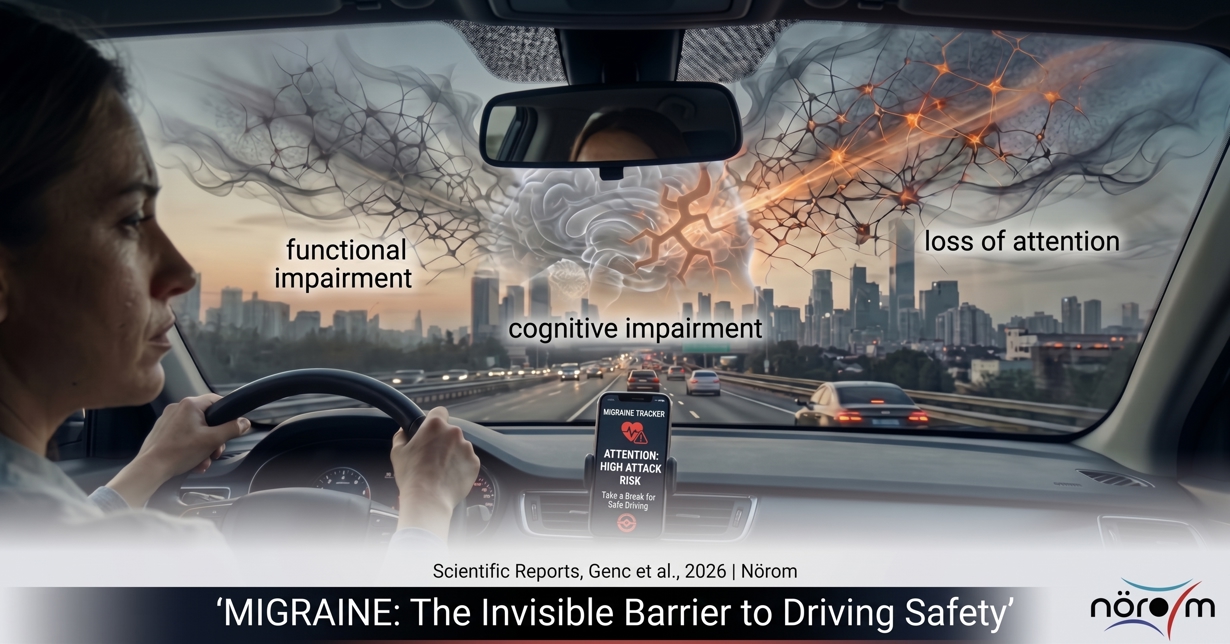
Driving is a highly complex activity that requires continuous attention, multisensory integration, and rapid response capacity, executing multiple mental and physical tasks simultaneously. A new study conducted within NÖROM thoroughly examined the often-overlooked performance impairments experienced by migraine patients behind the wheel. The study revealed the effects of migraine symptoms on driving safety and the coping strategies patients employed while in traffic.
Comprehensive Driver Profile and Headache Frequency
In this comprehensive cross-sectional study carried out by NÖROM researchers, individuals aged between 18 and 65 diagnosed with migraine according to international diagnostic criteria (ICHD-3) were placed under the spotlight. Throughout the process, structured face-to-face questionnaires were administered to 2,522 patients by 57 expert neurologists. As a result of the analyses, it was determined that 1,333 patients, with a mean age of 36.7, of whom 64.4% were female, had an active driving history.
In the study, patients were categorized into specific subgroups by experts based on whether their migraines were with or without aura, episodic or chronic, and vestibular. The data showed that active drivers experienced headaches directly during 13% of their driving sessions, and 70.6% of the participants experienced a migraine attack at least once while behind the wheel.
Cognitive Impacts and Changes in Driving Habits
One of the most striking findings of the study was the cognitive difficulties created by migraine attacks during driving. According to patient reports, headaches behind the wheel were primarily associated with conditions directly affecting driving safety, such as decreased attention (69%), restlessness (66%), and irritability (56%).
Due to these challenging symptoms caused by migraines, it was found that 9.2% of the patients reduced their driving frequency, and 1.7% completely stopped driving. Furthermore, a prominent detail of the study was that the average age of migraineous drivers involved in traffic accidents (35.3) was statistically younger than that of migraine-free drivers.
Coping Strategies in Traffic and Causal Relationships
It was observed that the most common methods drivers used to cope with a headache while behind the wheel included using analgesics or triptan-group painkillers (58.8%), turning off the music in the vehicle (51.9%), and wearing sunglasses (47.7%).
NÖROM researchers used an advanced statistical method called "Structural Equation Modeling" (SEM) to identify variables that influence the likelihood of quitting driving or of having an accident. This model revealed direct and indirect causal relationships between migraine subtypes, emerging symptoms, road conditions affecting driving sensitivity, the impact of headaches on driving, quitting driving, and accident probability.
The findings indicate that driving is a critical factor that can cause "insidious" performance impairment in migraine patients, threatening traffic safety, yet is insufficiently recognized in clinical evaluations and traffic regulations. The study emphasizes that increasing awareness regarding migraine-related driving impairments and supporting patients' coping mechanisms can reduce preventable risks and enhance quality of life.
NÖROM Research: Psychosocial Stress Selectively Disrupts the Brain's Time Perception Networks
Hidden Danger in Traffic: NÖROM Research Reveals the Effects of Migraine on Driving Safety
First in Turkish: R-Based Clinical Reading Assessment Tool Developed
Researchers at NÖROM Discover Protein Connection Between Chronic Migraine and Cognitive Complaints
First, They Spiked in Their minds, Then They Became World Champions!