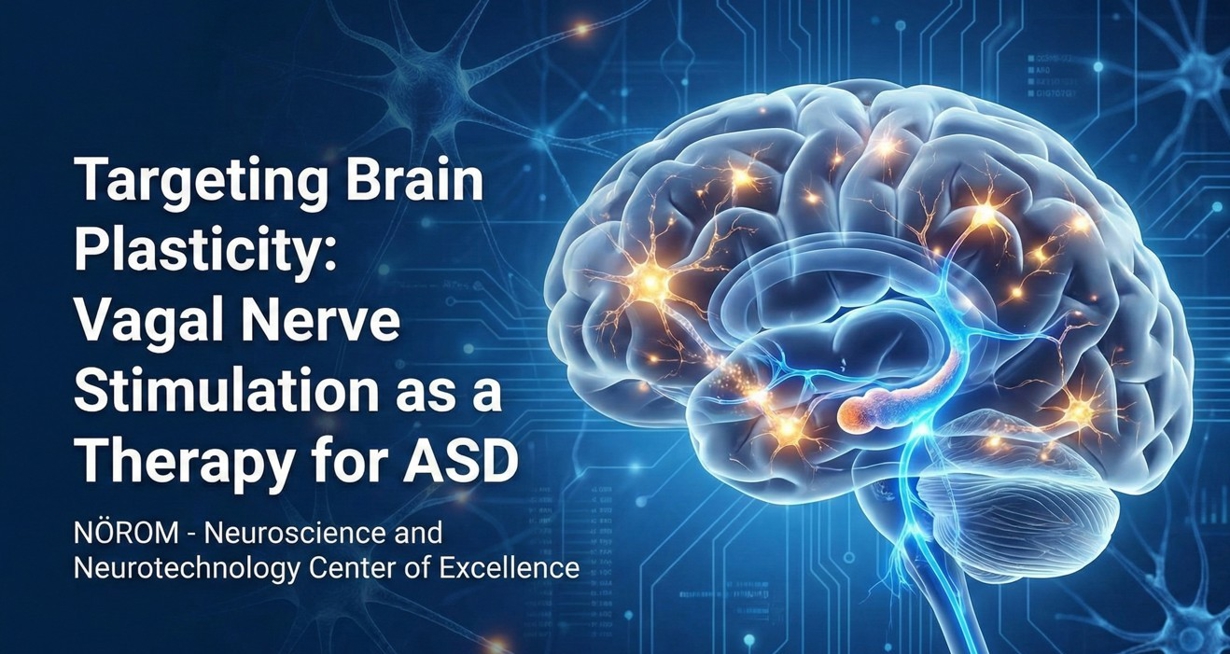
A recent study conducted at the Neuroscience and Neurotechnology Center of Excellence (NÖROM) investigates the therapeutic potential of non-invasive brain stimulation in Autism Spectrum Disorder (ASD). The research demonstrates that targeting brain plasticity through transauricular Vagal Nerve Stimulation (tVNS) significantly improves social deficits and restores neurodevelopmental markers in a valproic acid (VPA) mouse model.
Key Scientific Findings:
- Behavioral Restoration: The study utilized a battery of behavioral assays, including the Three-Chamber Test and Elevated Plus Maze. Results indicated that tVNS treatment significantly enhanced sociability and social preference indices while reducing anxiety-like behaviors in VPA-exposed mice, effectively counteracting the core behavioral deficits associated with ASD.
- Restoration of Neurogenesis: Histological and immunohistochemical analyses revealed that tVNS treatment reversed the VPA-induced reduction of critical neurogenic markers. Specifically, Brain-Derived Neurotrophic Factor (BDNF) and Doublecortin (DCX) expression levels were restored in the hippocampus, amygdala, and prefrontal cortex, suggesting a reinstatement of neuronal plasticity and proliferation.
- Neuroprotection and Apoptosis: The study identified elevated Caspase-3 immunoreactivity (an apoptosis marker) in the prefrontal cortex of the ASD model. tVNS intervention significantly downregulated Caspase-3 expression, indicating a neuroprotective mechanism that mitigates programmed cell death in cortical regions.
Clinical Implications: These findings highlight the potential of tVNS as a non-invasive, neuromodulatory therapeutic intervention. By targeting the underlying neurobiological mechanisms—specifically neurogenesis and apoptotic pathways—tVNS offers a promising avenue for alleviating both the behavioral and physiological symptoms of ASD.
Our Center NÖROM Has Joined EBRAINS AISBL as an Associate Member
An Event Titled “From Digital to Traditional, Awakening from Screen to Field” Was Organized
NÖROM Research: Protective Effects of Boric Acid on Sepsis-Induced Organ Damage
Prof. Hayrunnisa Bolay Belen Delivered the Final NÖROnoM Seminar of the Academic Year