NÖROM Research Uncovers the Molecular "Short-Circuit" Behind Medication-Overuse Headache
News Content:
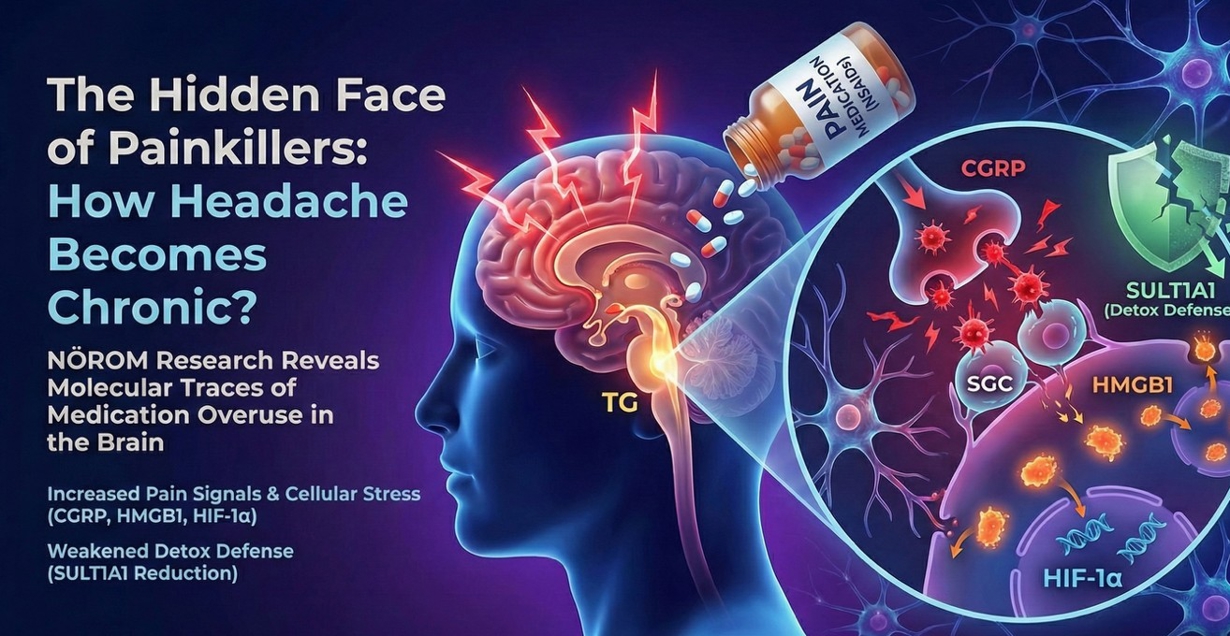
For millions of people suffering from migraines, reaching for a painkiller is a natural reflex. However, a groundbreaking study conducted at the Neuroscience and Neurotechnology Center of Excellence (NÖROM) has shed light on a cruel paradox: overusing these very medications can rewire the body's pain centers, turning a temporary headache into a chronic condition known as Medication-Overuse Headache (MOH).
While doctors have known about this phenomenon for years, the exact molecular mechanisms driving this transformation have remained largely a mystery—until now.
Unlocking the "Pain Switch" in the Trigeminal Ganglion
The study, focused on the effects of Non-Steroidal Anti-Inflammatory Drugs (NSAIDs) like piroxicam, investigated changes in the trigeminal ganglion—the primary nerve cluster responsible for transmitting head and face pain. Researchers discovered that chronic exposure to these painkillers triggers a cascade of stress signals at the cellular level.
Key Scientific Breakthroughs:
- The Detox Defense Crumbles: Perhaps the most significant finding is the drastic reduction of SULT1A1, a critical enzyme responsible for detoxification and metabolism within nerve cells. The study suggests that overuse of painkillers effectively disables the nerve cells' ability to "clean house," leaving them vulnerable to toxic stress.
- Cellular "Suffocation" and Alarm: The research revealed a robust increase in HIF-1α (a marker of low oxygen/cellular stress) and HMGB1 (an alarm molecule that triggers inflammation). This indicates that the pain-processing neurons are in a state of constant metabolic distress.
- The Pain Loop: As a result of this stress and inflammation, the levels of CGRP—the primary molecule that signals pain in migraines—skyrocket. This creates a vicious cycle where the medication intended to stop the pain actually fuels the biological machinery that produces it.
Why This Matters?
This research is vital for public health as it provides the first concrete evidence linking reduced detoxification capacity (SULT1A1) to chronic headache. It serves as a scientific warning that pain management requires balance. By understanding these specific molecular pathways, scientists can now work on targeted therapies that could reverse these changes, offering hope to patients trapped in the cycle of medication overuse.
https://link.springer.com/article/10.1186/s10194-025-02191-0
NÖROM Research: Psychosocial Stress Selectively Disrupts the Brain's Time Perception Networks
Hidden Danger in Traffic: NÖROM Research Reveals the Effects of Migraine on Driving Safety
First in Turkish: R-Based Clinical Reading Assessment Tool Developed
Researchers at NÖROM Discover Protein Connection Between Chronic Migraine and Cognitive Complaints
First, They Spiked in Their minds, Then They Became World Champions!